Hugging Face 传出要卖 130 亿:现金流会骗人,位置不会Hugging Face Is Reportedly Exploring a $13B Sale: Cash Flow Lies, Position Doesn't
A web original — first published here on August 24, 2026.本文 2026.08.24 首发于本站。
导读
Hugging Face 传出在探索出售,要价 130 亿美金。前不久湖人 125 亿美金成交,而距离上次湖人出售,仅仅过去 17 个月,买家是迪斯尼传奇 CEO 和川普女婿的亲弟弟。
两条新闻一起看:都是资产,而且都不是按赚钱能力定价的资产。
有钱人为什么都喜欢买球队
湖人按利润算,这个价要收几十年才回本,买家看的也不是利润。买的是特许权,是稀缺本身和抗衰退性。体育在美国乃至全球,已成为一种资产类别,这个现象在 10 年前是不存在的。而传统上,体育球队具有非常强的抗衰退能力,它们的价值不会大幅下跌。如果拉长时间维度来看,过去 50 年里,出售价格低于收购价格的球队屈指可数,这些资产的稀缺性可见一斑。
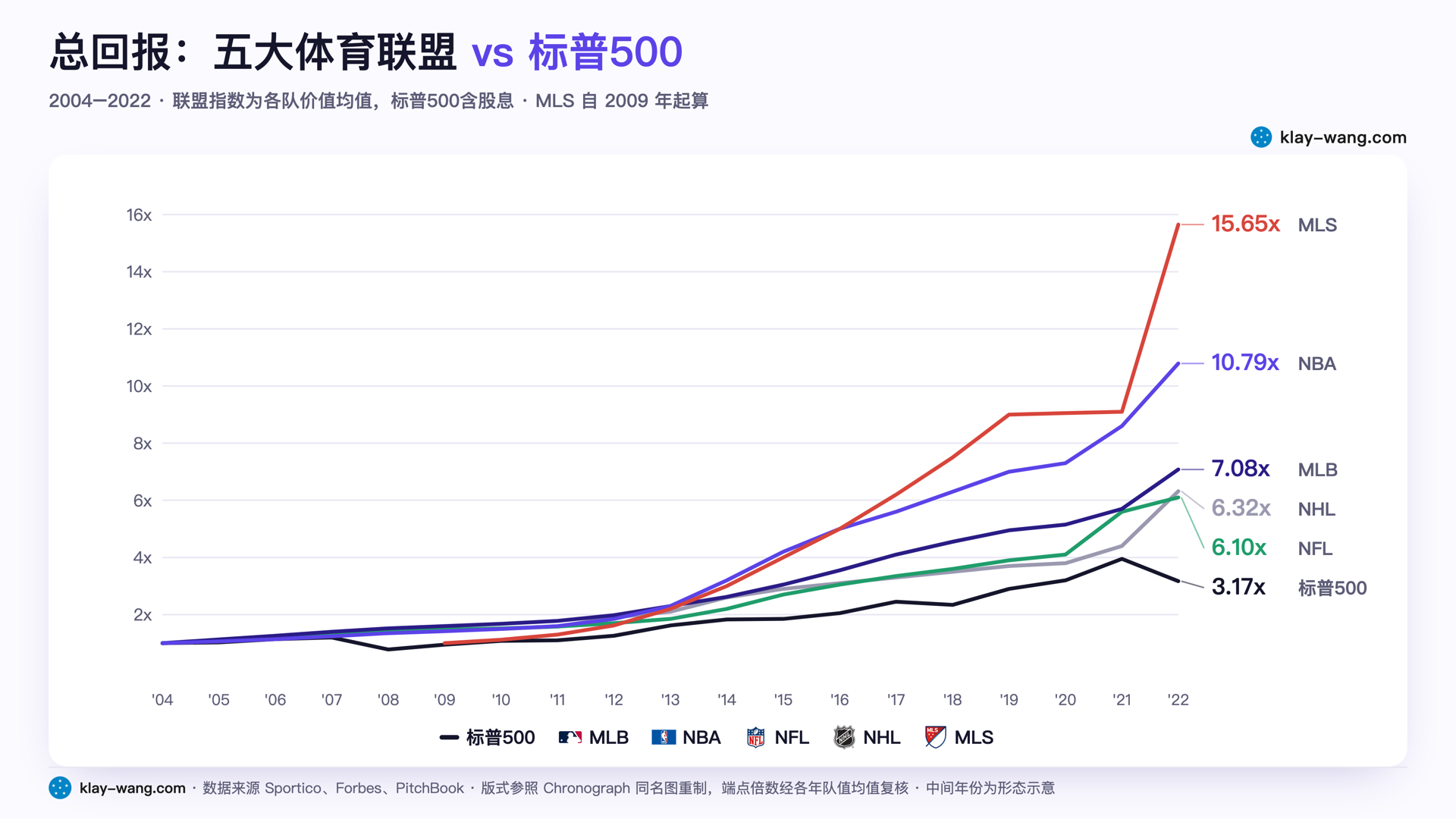
2004 到 2022 这十八年,标普 500 含股息涨了 3.17 倍,而五大联盟的球队均值:MLS 15.65 倍、NBA 10.79 倍、MLB 7.08 倍、NHL 6.32 倍、NFL 6.10 倍,没有一个联盟跑输大盘。
NFL 球队只有 32 支,且没有更多球队诞生。每年都会有新的亿万富翁诞生。NBA 球队有 30 支,目前肖华在积极扩军,未来大概率会再增加两支。但扩张的情况相当罕见,尤其是在北美四大体育联盟中。
事实先钉死
截至今天没有一家被点名的买家,只知道 HF 请了一家银行在试探兴趣。能参考的是 2023 年那轮的股东名单:Salesforce 领投,Google、Amazon、英伟达、Intel、IBM、高通、AMD 跟投。买家大概率从这张桌子上产生,因为他们有数据、有关系、还有优先了解权。
个人的排序
按谁付得起这个价、且能在门后盖出自己的 Copilot:
英伟达(逻辑最顺)
HF 上 300 万个模型几乎全跑在达子的卡上,全世界 300 万个开源模型、100 万个数据集的唯一全集,这是货。1300 万用户把发模型和找模型的第一反应都放在它这,这是位置。
最值钱的是所有下载流水都过它的手:谁在用什么模型、什么任务在起量、哪个数据集突然被企业批量拉取,它比任何人都早知道。相当于握着整个开源 AI 经济的实时用电量表,财报要等一个季度,这张表每天都在走字。
买下它等于把模型分发的默认入口焊进 CUDA 生态,让每一次模型下载都通向自家算力。更关键的是中立性。Hugging Face 的价值建立在它是瑞士(所有实验室都愿意把模型放上去),而 Nvidia 是唯一买了它还能保住瑞士地位的买家,达子本来就卖铲子给所有人。换成任何一家云厂或模型公司,Meta 和 Google 们第二天就开始搬家。
Google / Amazon(并列第二)
CSP 买,是为了算力附着:模型在哪,推理算力消耗就在哪,两家都是老股东。但都有瑞士问题:竞争对手的模型还愿不愿意放在你家的货架上。
Salesforce(第三)
上轮的领投方,企业的 AI 叙事需要它,买了感觉能弥补 SaaS 已死的论断,而 Benioff 又是出了名的喜欢买买买。不过 130 亿的价格,对它当前的资本纪律,可能是个坎。
微软(逻辑最顺,但障碍最大)
如果买了,买 GitHub 的剧本可以原样重演一遍。但正因为已经拥有 GitHub,再买下模型界的 GitHub,必然触发反垄断审查。
还有可能最后谁都不买
这个要价按 2024 年约 1.3 亿美元的第三方 ARR 估算是 100 倍收入,按 2023 年约 7,000 万估算是 185 倍,无论哪个口径都远超软件行业常规,它本身可能就是试探,试探完发现瑞士卖给谁都会毁掉瑞士,最后走 IPO。
门票钱从来不是靠门票赚回来的
所以如果出售,意味着开源 AI 的公共基础设施,第一次要有主人了。这个位置自己经营收不到什么钱,装进巨头的报表里,每次模型下载都能通向算力、云和企业服务。微软当年 75 亿买 GitHub 是同一笔账,25 倍收入人人嫌贵,后来 Copilot 一年收几十亿。
一边是永远不增发的老资产,一边是刚成为基础设施的新资产,定价逻辑是同一条:现金流会骗人,位置不会。
附:Hugging Face 是怎么一步步走到今天的
上面那笔账的前提,是它已经站在那个位置上。但这个位置不是设计出来的,是一次失败之后捡回来的。
一个没做成的青少年聊天机器人(2016–2018)
2016 年,三个法国人 Clément Delangue、Julien Chaumond、Thomas Wolf 在纽约创立了 Hugging Face。第一个产品是给青少年用的聊天机器人 App,名字直接取自那个抱抱脸表情。
它拿过两轮钱:2017 年 120 万美元,投资人里有 SV Angel、Betaworks,还有 NBA 球星凯文·杜兰特;2018 年 5 月再拿 400 万种子轮。两轮加起来 520 万,全部花在一个最终没做成的产品上。
聊天机器人最高做到大约 10 万日活,然后就停在那儿了。团队后来讲得很直白:技术明明在进步,但那些进步换不来用户增长和留存。
一周之内改写命运(2018 年底)
2018 年底,Google 放出了 BERT。Hugging Face 团队用一周时间做出并开源了它的 PyTorch 版本。这一周是分水岭。他们做那件事的时候还是一家聊天机器人公司,那套模型本来是给自家产品用的。但开源出去之后,社区的反应远远超过了他们自己的产品曾经拿到的任何反馈。2019 年公司正式转向,聊天机器人下线,Transformers 库成为主线。
这是全篇最值得记的一段:他们不是想清楚了才转型的,是先把东西放出去,然后由反应告诉他们该做什么。
从库到平台:位置是怎么攒出来的(2019–2023)
转型之后的融资节奏,基本就是外界对这个位置值多少钱的重新报价:
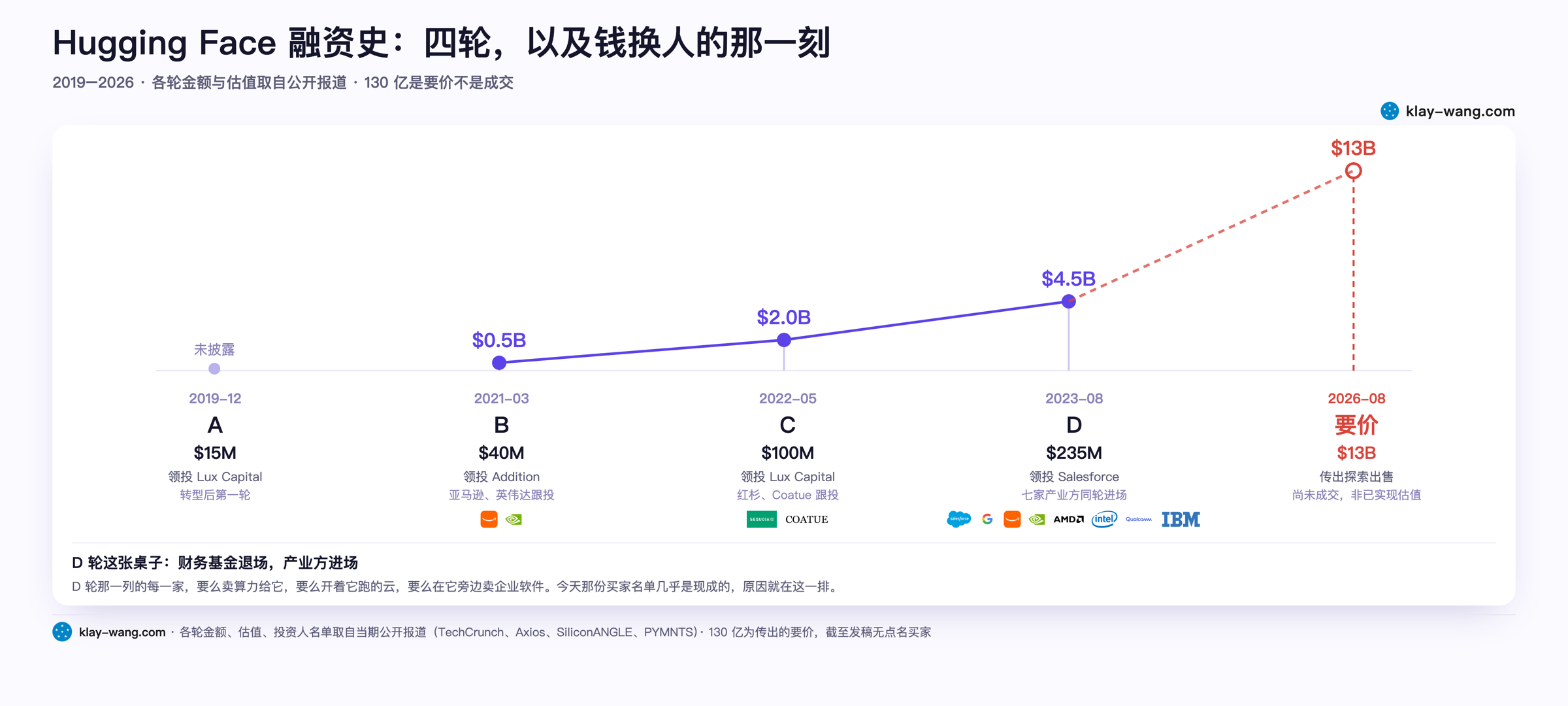
关键的变化发生在 C 到 D 之间:投资人从财务基金变成了产业方。D 轮那张桌子上坐的全是要用它的人:云厂、芯片厂、企业软件厂。那一刻它已经不是一家创业公司的融资,是一次行业共同持股。
也正是这张桌子,让今天的买家名单几乎是现成的。
钱从哪来:一个刻意不收钱的商业模式
Hugging Face 的核心动作是不收钱:模型、数据集、Spaces 无限量托管,公开私有都免费。收入来自三层:个人 Pro 订阅、Enterprise Hub(企业版,支持 SaaS 与私有部署)、Inference Endpoints(托管推理)。ARR 大约是 2023 年 7,000 万美元、2024 年 1.3 亿美元。到 2025 年,平台上有大约 1,300 万用户、超过 50 万个组织,财富 500 强里超过三成有验证账号。
用一句话概括它的模式:先把全世界的模型都放进来,再向那些必须用它的公司收钱。 这和早期 GitHub 是同一个剧本,外界普遍认为它收得太少,免费的那部分远大于收费的那部分。
它有没有过危险时刻
有,但不是外界想的那种。真正的危险在 2018 年:一个 10 万日活、增长停滞、花掉 520 万的消费产品,正常结局是慢慢关掉。它躲过去,靠的是一次和主营业务无关的开源动作。转型之后,它的问题从活不活得下去,变成了怎么把位置换成钱:托管成本随模型体积和下载量线性上涨,而收入靠的是一小部分企业客户。这个剪刀差没有把它逼死,但它一直在。
所以要不要卖这个问题,本质上是:这个位置的变现,需不需要一张更大的资产负债表来做。
130 亿是什么倍数
按 2023 年约 7,000 万 ARR 算,130 亿是 185 倍;按 2024 年约 1.3 亿 ARR 算,是 100 倍。
无论用哪个数,这个价格都不是按收入定的。它定的是那个位置。
事实口径:融资金额、估值、投资人名单取自各轮公开报道(TechCrunch、Axios、SiliconANGLE、PYMNTS);ARR 与用户数为第三方研究机构估算(Contrary Research、Sacra、Latka),非公司披露,引用时请当估算看。截至本文发稿,Hugging Face 未公开确认出售意向,亦无任何被点名的买家。
The setup
Hugging Face is reportedly exploring a sale, asking $13 billion. The Lakers just traded at $12.5 billion, only 17 months after the last time they changed hands. The buyers: a legendary Disney CEO, and the younger brother of Trump's son-in-law.
Read the two together: both are assets, and neither one is priced on its ability to make money.
Why rich people keep buying sports teams
Run the Lakers on profit and it takes decades to earn the price back. Profit isn't what the buyer is looking at. What they're buying is a franchise: scarcity itself, and the fact that it doesn't break in a downturn. Sport has become an asset class, in the US and globally. Ten years ago that sentence wouldn't have been true. And historically, teams hold up extraordinarily well through recessions; their values don't fall off a cliff. Zoom out fifty years and you can count on your fingers the teams that sold for less than they cost. That's what scarcity looks like on a chart.
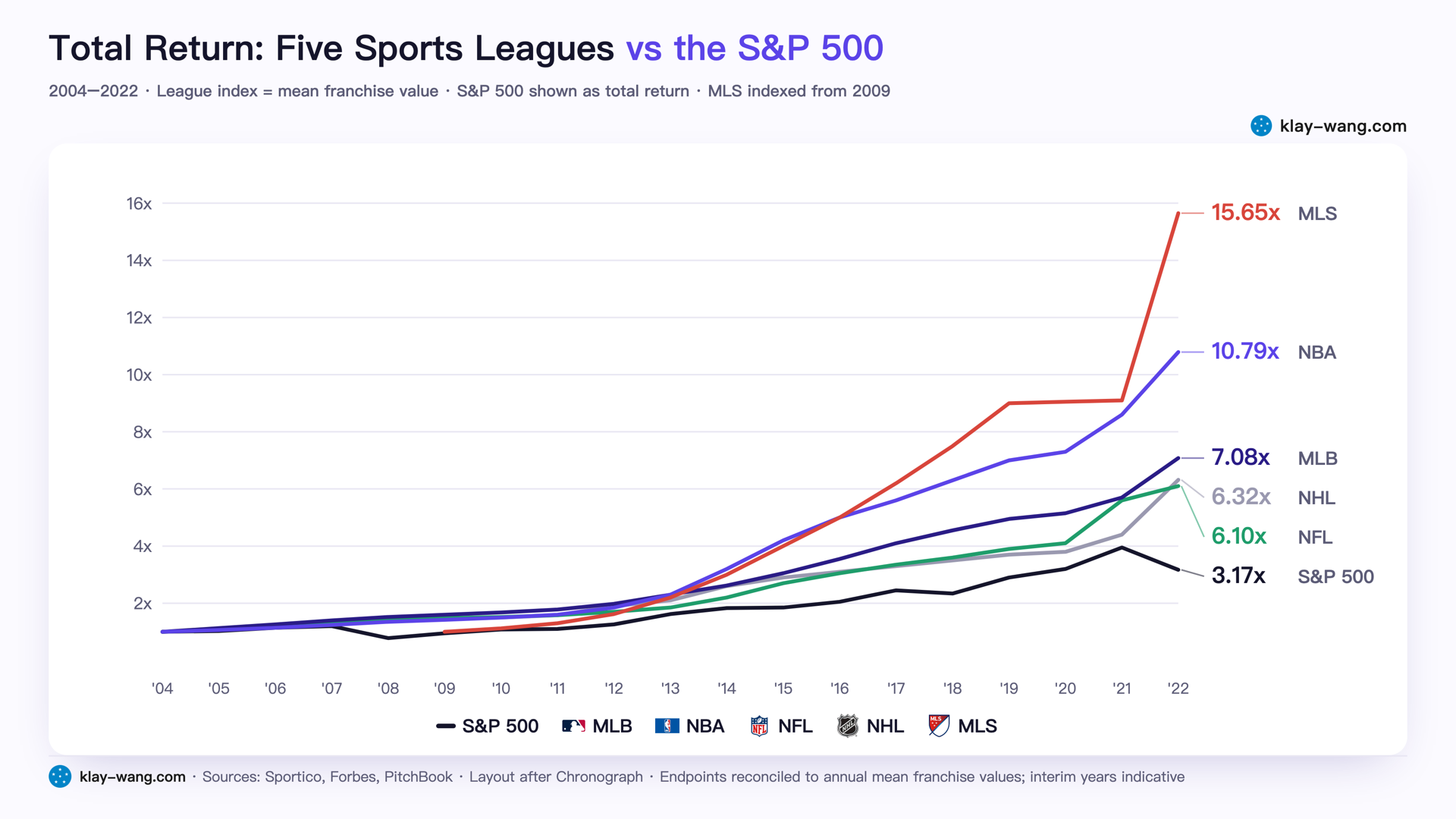
Over those eighteen years the S&P 500 returned 3.17x with dividends. Mean franchise value: MLS 15.65x, NBA 10.79x, MLB 7.08x, NHL 6.32x, NFL 6.10x, and not one league lost to the index.
There are 32 NFL teams and there will not be more. There are new billionaires every year. The NBA has 30, and Adam Silver is actively pushing expansion, and two more is the likely outcome. But expansion is rare, especially across North America's big four.
Nail down what's actually known
As of today, not one named buyer. All we know is that HF hired a bank to test interest. The thing worth reading is the 2023 cap table: Salesforce led, with Google, Amazon, Nvidia, Intel, IBM, Qualcomm and AMD alongside. A buyer probably comes off that table, because they have the data, the relationships, and the right to look first.
My ranking
Sorted by who can write the check and build their own Copilot behind the door:
Nvidia: the cleanest logic
Nearly all three million models on HF run on Jensen's silicon. Three million open models and a million datasets, in one place, nowhere else. That's the inventory. Thirteen million users whose first instinct, when publishing or hunting for a model, is to go there. That's the position.
The most valuable part is that every download passes through its hands. Who's running what, which tasks are scaling, which dataset suddenly gets pulled in bulk by enterprises, it knows before anyone else. It's a live meter on the whole open-source AI economy. Earnings arrive a quarter late; this meter is spinning every day.
Buying it welds the default distribution point for models into the CUDA estate, so every model download leads back to your own compute. And then there's neutrality. Hugging Face is worth what it's worth because it's Switzerland, and every lab is willing to park its models there. Nvidia is the only buyer that can own it and keep it Swiss, because Jensen was already selling shovels to everybody. Hand it to a cloud or a model company and Meta and Google start packing the next morning.
Google / Amazon: tied for second
The CSP case is compute adjacency: wherever the models live is where the inference burn happens. Both are existing shareholders. Both have the Switzerland problem: does your competitor still want his models sitting on your shelf?
Salesforce: third
Led the last round. The enterprise AI story needs it, and buying this would feel like an answer to the "SaaS is dead" line. Benioff is also famously fond of shopping. But $13 billion against its current capital discipline is a real hurdle.
Microsoft: cleanest playbook, biggest obstacle
If it bought, the GitHub script could be run again word for word. But precisely because it already owns GitHub, buying the GitHub of models would trigger an antitrust review on contact.
Nobody buys, also possible
The ask works out to roughly 100x revenue against 2024 third-party ARR estimates of ~$130M, or 185x against 2023's ~$70M. Either way it is far outside normal software territory, and the number may itself be the probe. Run the probe, discover that selling Switzerland to anyone destroys Switzerland, and take the IPO route instead.
Nobody ever made the ticket price back on tickets
So if it sells, it means the public infrastructure of open-source AI gets an owner for the first time. The position doesn't make much money running on its own. Slot it into a giant's P&L and every model download leads to compute, to cloud, to enterprise services. Microsoft paying $7.5B for GitHub was the same arithmetic. 25x revenue, everyone said it was expensive, and then Copilot started billing a few billion a year.
One asset never issues new shares; the other only just became infrastructure. The pricing logic is identical: cash flow lies, position doesn't.
Appendix: How Hugging Face actually got here
Everything above assumes it already occupies the position. But the position wasn't designed. It was salvaged from a failure.
A teen chatbot that didn't work (2016–2018)
Hugging Face was founded in New York in 2016 by three Frenchmen: Clément Delangue, Julien Chaumond and Thomas Wolf. The first product was a chatbot app for teenagers, named straight after the 🤗 emoji.
It raised twice: $1.2M in 2017, with SV Angel, Betaworks and NBA star Kevin Durant on the cap table; then a $4M seed in May 2018. $5.2M in total, all of it spent on a product that never worked. The chatbot topped out around 100,000 daily actives and stalled there. The team has been blunt about why: the technology kept improving, and none of that improvement converted into growth or retention.
One week that changed the company (late 2018)
In late 2018, Google released BERT. The Hugging Face team built and open-sourced a PyTorch implementation of it in a week. That week was the hinge. They were still a chatbot company when they did it, and the model was meant for their own product. But once it was out, the community response dwarfed anything their actual product had ever produced. In 2019 the company formally turned: the chatbot was shut down, and the Transformers library became the main line.
This is the part worth remembering: they didn't reason their way into the pivot. They shipped something, and the reaction told them what to be.
From library to platform (2019–2023)
The funding cadence after the pivot is really just the market repricing that position, round by round:
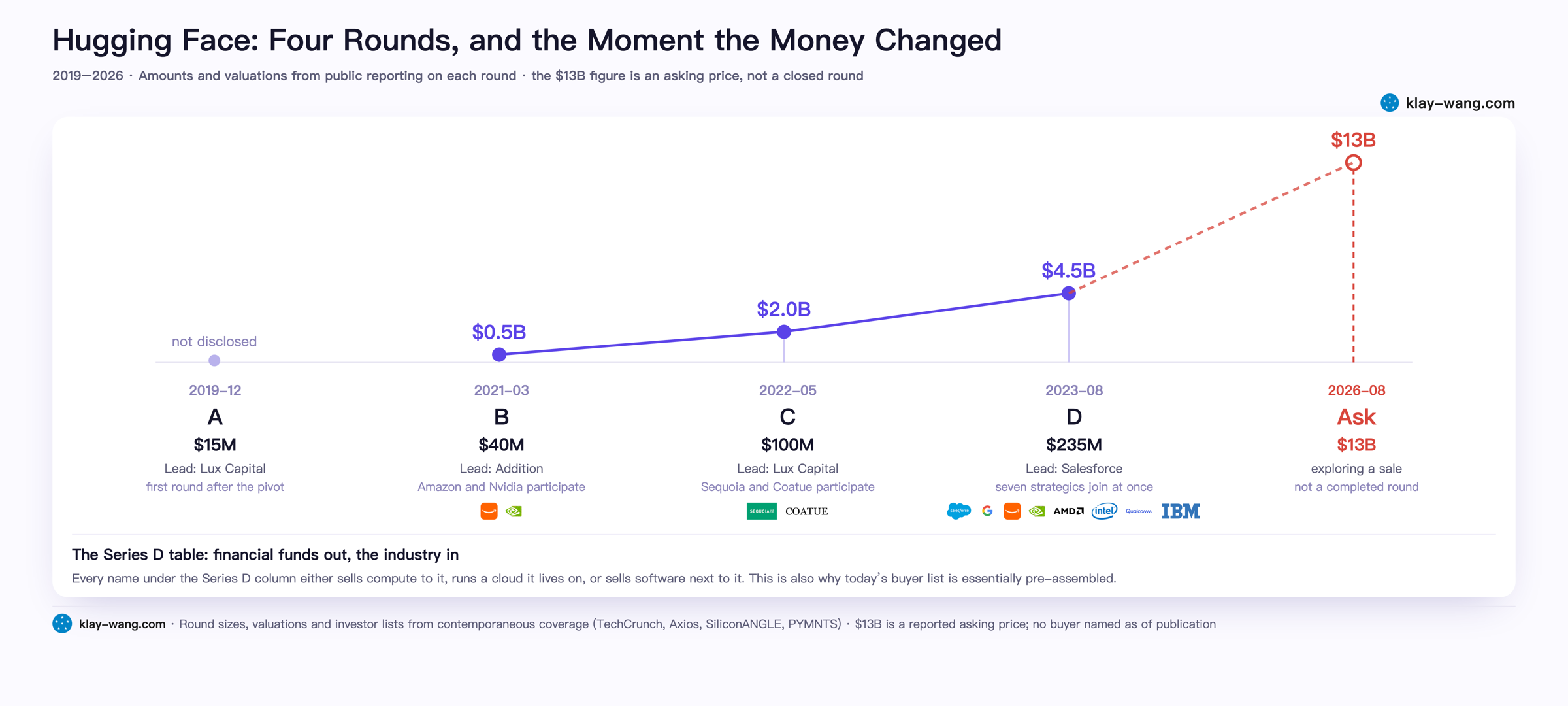
The interesting shift happens between C and D: the investors stop being financial funds and start being the industry. Everyone at the Series D table was someone who actually uses it: clouds, chip makers, enterprise software. At that point it stopped being a startup raising money and became something closer to shared industry ownership.
That same table is why today's buyer list is essentially pre-assembled.
The business model is: deliberately don't charge
Hugging Face's core move is not charging. Models, datasets and Spaces, unlimited, public or private, free. Revenue comes in three layers: individual Pro subscriptions, Enterprise Hub (SaaS and on-prem), and Inference Endpoints (managed inference). ARR ran roughly $70M in 2023 and about $130M in 2024. By 2025 the platform had around 13 million users and more than 500,000 organizations, with verified accounts at over 30% of the Fortune 500.
The model in one line: get every model in the world onto the shelf, then charge the companies that can't operate without it. Same script as early GitHub, and the consensus is the same too: it charges too little. The free surface is far larger than the paid one.
Was it ever in danger
Yes, but not in the way people assume. The real danger was 2018: a consumer product with 100,000 daily actives, flat growth, and $5.2M spent. The normal ending is a quiet shutdown. What saved it was an open-source side action with nothing to do with the core business. After the pivot the question changed from can it survive to how do you turn a position into money. Hosting costs scale linearly with model size and download volume; revenue depends on a thin layer of enterprise customers. That scissor never killed it, but it has never gone away either.
Which reframes "should it sell": the question is whether monetizing this position requires a bigger balance sheet than its own.
So what multiple is $13B
Against 2023 ARR of ~$70M, $13B is 185x. Against 2024 ARR of ~$130M, it's 100x.
Either way, this price isn't set on revenue. It's set on the position.
On sourcing: round sizes, valuations and investor lists come from contemporaneous coverage of each round (TechCrunch, Axios, SiliconANGLE, PYMNTS). ARR and user counts are third-party estimates (Contrary Research, Sacra, Latka), not company disclosures, so treat them as estimates. As of publication Hugging Face has not confirmed any intent to sell, and no buyer has been named.
Comments留言